
In June of last year, we explored how miniature camera systems are being considered in law enforcement environments, particularly in applications requiring covert surveillance. As imaging technology continues to evolve, we felt it would be helpful to expand on that discussion and take a broader look at the technical considerations surrounding low-light performance, integration, and reliability in demanding environments.
Modern law enforcement environments present complex visual challenges. From low-light conditions to dynamic field settings, the ability to capture clear, reliable imagery in extreme low light settings has become increasingly important across investigative surveillance and extreme low light conditions.
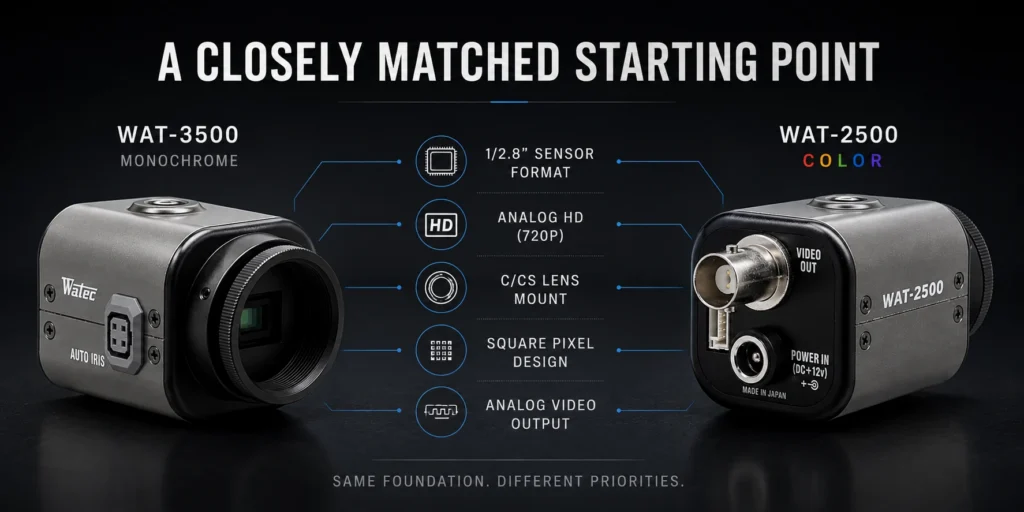
According to the Bureau of Justice Statistics (BJS), over 75% of local police departments in the United States reported using some form of digital imaging technology as part of their operational infrastructure.¹ As digital evidence continues to play a critical role in investigations and documentation, the technical requirements for imaging systems have evolved significantly. Watec continues to provide multiple video outputs to support our law enforcement applications. Have a look at our WAT-933IP, WAT-3200, WAT-09U2, WAT-07U2D ultra low light digital camera options and the WAT-3500 ultra low light B/W camera.
This article explores the imaging considerations relevant to law enforcement environments, with a focus on low-light capability, compact integration, and reliability in demanding conditions.
The Growing Importance of Digital Imaging

Digital imagery today supports:
- Ultra low light surveillance operations
- Vehicle theft monitoring
- Evidence documentation
- Scene analysis
- Infrastructure monitoring
- Situational awareness in low-visibility environments
The U.S. Department of Justice’s National Institute of Justice (NIJ) emphasizes that reliable imaging technology is critical for documentation accuracy and evidentiary integrity.² Image clarity, consistency, and reproducibility are essential factors when visual data may later be reviewed in investigative or judicial contexts.
This places technical demands on camera systems that extend beyond consumer-grade capabilities. With a wide range of video output options, Watec has an ultra low light camera solution for nearly all applications.
Low-Light Performance: A Critical Consideration

Many law enforcement environments involve reduced lighting conditions:
- Rural settings with minimal ambient light
- Indoor structures during nighttime operations
- Perimeter monitoring after dark
- Areas without supplemental illumination
Research from the National Institute of Standards and Technology (NIST) highlights the importance of signal-to-noise ratio and sensor sensitivity in low-light imaging.³ Inadequate performance can result in:
- Loss of fine detail
- Increased image noise
- Motion blur
- Reduced evidentiary clarity
Ultra-low-light camera systems, particularly those designed for professional applications and are engineered to maintain image integrity in light environments measured in fractions of a lux.
Compact and Integrable Imaging Systems
Unlike fixed commercial security cameras, law enforcement applications require:
- Compact camera form factors
- Integration into custom systems
- Flexible mounting configurations
- Compatibility with existing recording platforms
- Ultra low light gathering capability in both B/W and color options
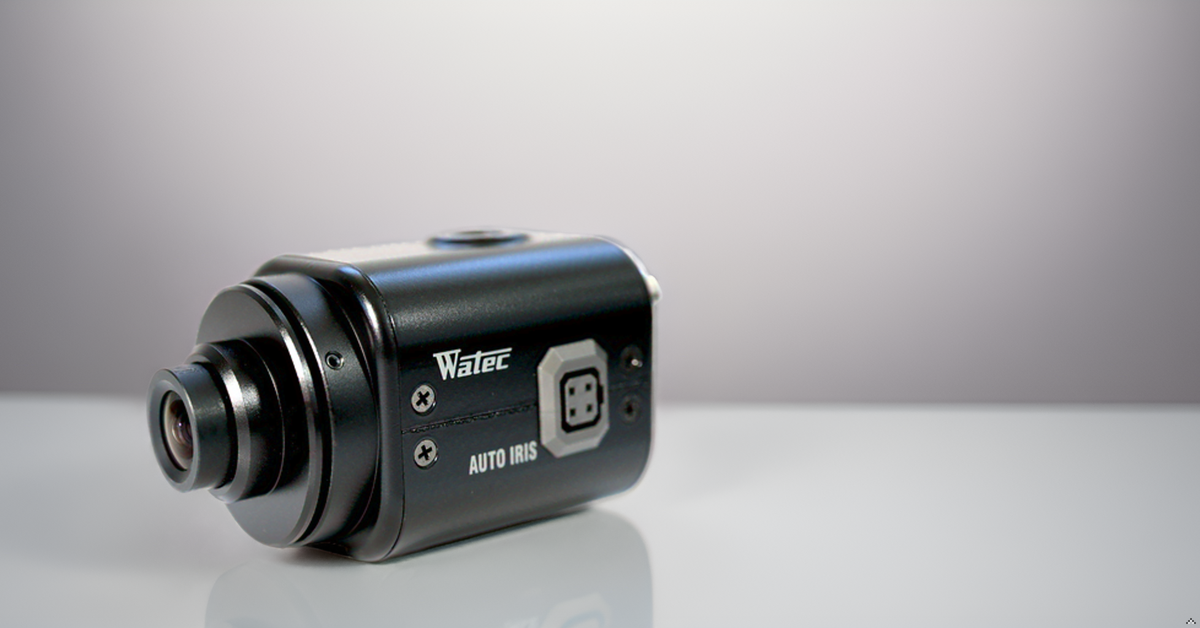
In these cases, Watec offers small-format, board-level, and modular cameras that offer advantages over larger consumer systems. Compact industrial camera systems are often designed to:
- Operate continuously
- Withstand vibration or environmental variation
- Interface easily with external power and recording solutions
According to NIJ technology evaluations, modularity and integration flexibility are growing priorities in law enforcement technology procurement.⁴ Watec offers a variety of off the shelf solution.
Reliability and Environmental Durability

Camera systems used in demanding environments must prioritize:
- Stable power requirements
- Minimal heat generation
- Flawless continual video imaging in extreme temperature conditions
- Consistent performance over long periods
Unlike consumer cameras designed for occasional use, Watec’s professional-grade industrial cameras are engineered for continuous operation — an important distinction when reliability directly affects quality.
The Importance of Evidence-Quality Imaging
In legal and investigative contexts, imaging must be:
- Clear
- Repeatable
- Technically defensible
- Free from excessive digital manipulation
Organizations such as the Scientific Working Group on Imaging Technology (SWGIT) have published guidelines emphasizing image authenticity and preservation of original data integrity.⁵
Camera systems intended for professional applications are typically designed with these principles in mind, prioritizing:
- Clean sensor output
- Minimal artificial enhancement
- Accurate signal capture
Imaging Technology Trends in Law Enforcement

Several technology trends are influencing procurement and system design:
- Migration toward IP-based and other digital output systems
- Increased demand for low-light and near-infrared sensitivity, Watec cameras mentioned above operate in 940nm.
- Integration with digital evidence management systems
- Emphasis on compact, deployable systems
As agencies modernize infrastructure, camera systems that provide professional-grade performance — particularly in challenging lighting conditions — are increasingly relevant.
Professional Imaging Considerations
When evaluating camera systems for demanding environments, key technical considerations often include:
- Minimum illumination rating (lux sensitivity: Watec cameras mentioned above operate in .003 – .000005lux )
- Sensor size and performance characteristics
- Signal-to-noise ratio
- Dynamic range
- Integration compatibility
- Environmental durability
Conclusion
Watec imaging and technology continue to play an expanding role in law enforcement applications. As operational demands evolve, the need for reliable, low-light-capable, and integrable camera systems becomes increasingly important and Watec provides professional grade solutions.
While application requirements vary widely, Watec emphasizes priorities to remain consistent in clarity, reliability, high quality standards and performance under real-world conditions.
For organizations evaluating imaging solutions for demanding environments, understanding the technical factors behind professional-grade camera systems is essential to making informed decisions.
Contact our Decatur–Huntsville support team today or request a personalized quote: (888) 567-4294
References
- Bureau of Justice Statistics (BJS), Law Enforcement Management and Administrative Statistics (LEMAS)
- National Institute of Justice (NIJ), Digital Evidence and Imaging Standards
- National Institute of Standards and Technology (NIST), Low-Light Imaging and Sensor Performance Guidelines
- National Institute of Justice Technology Evaluation Program
- Scientific Working Group on Imaging Technology (SWGIT) Best Practices