
660E G3.8 EIA
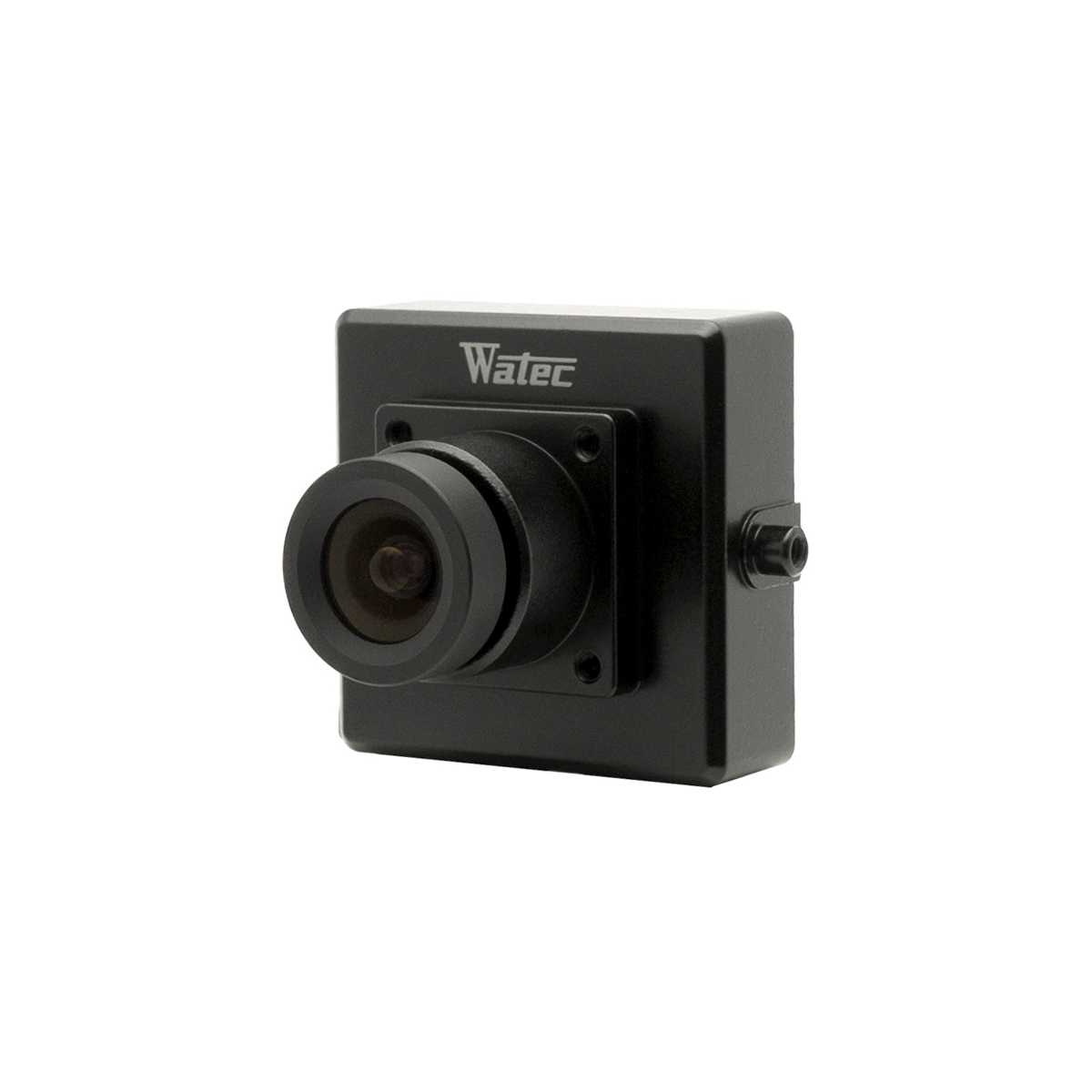
High-sensitivity monochrome imaging in a compact, integration-ready cube. The Watec WAT-660E (G3.8) combines a built-in 3.8 mm lens, progressive scanning, and composite analog output for security, medical imaging, OEM equipment, and other professional systems where installation space is limited.
Its 1/4-inch CMOS sensor provides 648 × 488 effective pixels and horizontal resolution exceeding 480 TV lines at the image center. Minimum illumination reaches 0.002 lx at F2.0 with AGC at 42 dB and the shutter off. A four-pin connector carries video and DC power, with a recommended DC 5–12 V input range. Measuring approximately 29.4 × 29.4 × 29.5 mm and weighing approximately 33 grams, the WAT-660E delivers proven Watec low-light performance without adding unnecessary size or complexity.
The Watec WAT-660E (G3.8) is a compact miniature monochrome camera designed around a 1/4-inch CMOS image sensor with 648 × 488 effective pixels. It uses progressive scanning and provides a 1.0 Vp-p, 75-ohm unbalanced composite-video signal in EIA or CCIR format.
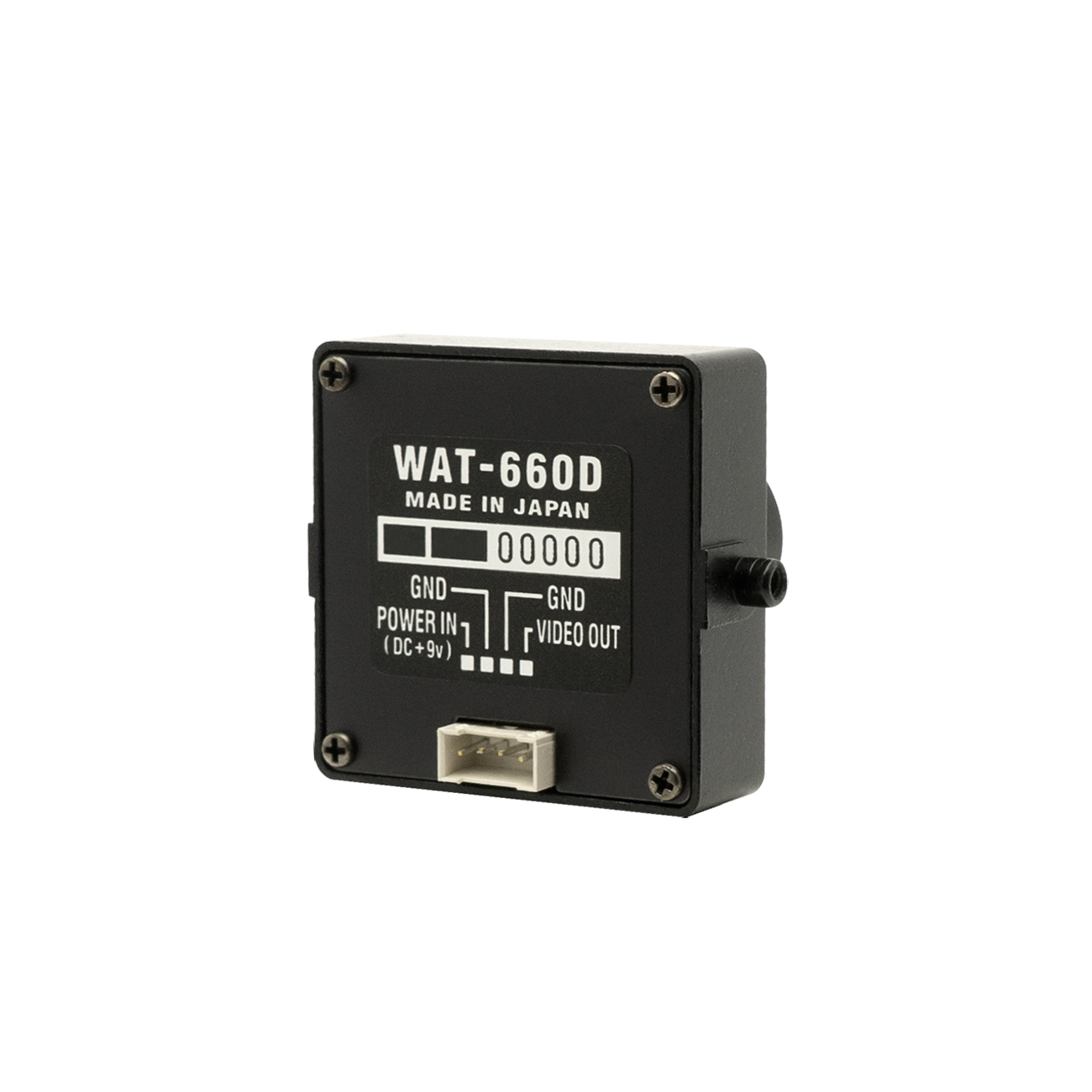
The square camera body incorporates an M12 miniature lens and uses a single four-pin connector for composite-video output and DC power input.
High-Sensitivity Monochrome Imaging
Minimum illumination is 0.002 lx at F2.0 with automatic gain control at 42 dB and the shutter off. Automatic gain control operates from 0 to 42 dB.
Horizontal resolution exceeds 480 TV lines at the center of the image. The signal-to-noise ratio exceeds 52 dB with AGC off at 0 dB and gamma at 1.0.
Automatic Exposure and Video Output
The electronic-iris range is 1/60 to 1/100,000 second for EIA and 1/50 to 1/100,000 second for CCIR. Backlight compensation is provided, the gamma characteristic is approximately 0.45, and the video level is 100 IRE.
Composite video and power are carried through the camera’s four-pin connector. The included four-pin cable provides separate conductors for video output, power input, and ground.
Built-In Miniature Lens
The standard 3820BC-12 miniature lens has a 3.8 mm focal length and F2.0 aperture. The camera uses an M12 P=0.5 lens mount, and additional compatible Watec M12 miniature lenses are available.
Glass lenses and pinhole lenses are not interchangeable on this camera configuration.
Compact System Integration
The WAT-660E measures approximately 29.4 × 29.4 × 29.5 mm, excluding the side mounting bosses and cable, and weighs approximately 33 grams. Threaded M2 mounting bosses on both sides support installation with the optional B001 camera bracket.
The recommended power-supply range is DC 5–12 V. Power consumption is approximately 0.45 W across the documented input range, drawing approximately 90 mA at DC 5 V or 37.5 mA at DC 12 V.
The operating-temperature range is -10°C to +50°C. Operating and storage humidity is 95% RH or less without condensation. The camera is designed for indoor use and is not water-resistant or waterproof.
Downloads
Specifications
| Specification | WAT-660E (G3.8) |
|---|---|
| Camera Type | Miniature monochrome analog camera with built-in lens |
| Video Standards | EIA and CCIR |
| Image Sensor | 1/4-inch CMOS |
| Effective Pixels | 648 (H) × 488 (V) |
| Unit Cell Size | 5.6 µm (H) × 5.6 µm (V) |
| Imaging | Monochrome |
| Synchronization | Internal |
| Scanning System | Progressive |
| Video Output | Composite video, 1.0 Vp-p, 75 Ω unbalanced |
| Horizontal Resolution | More than 480 TV lines at image center |
| Minimum Illumination | 0.002 lx at F2.0, AGC at 42 dB, shutter off |
| Signal-to-Noise Ratio | More than 52 dB with AGC off at 0 dB and gamma at 1.0 |
| EIA Electronic Iris | 1/60 to 1/100,000 second |
| CCIR Electronic Iris | 1/50 to 1/100,000 second |
| Automatic Gain Control | 0–42 dB |
| Gamma Characteristic | Approximately 0.45 |
| Video Level | 100 IRE |
| Backlight Compensation | BLC |
| Interface | Four-pin connector for composite video and power input |
| Four-Pin Cable Length | 300 mm |
| Lens Mount | M12 P=0.5 |
| Standard Lens | 3820BC-12, 3.8 mm, F2.0 |
| Recommended Power Supply | DC 5–12 V |
| Allowable Input Range | DC 4.6–14 V |
| Power Consumption | 0.45 W; approximately 90 mA at DC 5 V or 37.5 mA at DC 12 V |
| Operating Temperature | -10°C to +50°C |
| Storage Temperature | -30°C to +70°C |
| Operating/Storage Humidity | 95% RH or less without condensation |
| Dimensions | Approximately 29.4 × 29.4 × 29.5 mm, excluding side mounting bosses and cable |
| Mounting | Threaded M2 mounting bosses on both sides |
| Weight | Approximately 33 g |
| Included Accessory | Four-pin cable |
| Environmental Use | Indoor use; not water-resistant or waterproof |
| EMC | EIA: FCC Part 15 Class B; CCIR: EN 61000-6-3 and EN 50130-4 |
FAQ
What is the WAT-660E (G3.8)?
The WAT-660E (G3.8) is a miniature monochrome analog camera with a 1/4-inch CMOS sensor, built-in 3.8 mm lens, and composite-video output.
What resolution does the WAT-660E provide?
The camera provides 648 × 488 effective pixels and horizontal resolution exceeding 480 TV lines at the center of the image.
How sensitive is the WAT-660E in low light?
Minimum illumination is 0.002 lx at F2.0 with automatic gain control at 42 dB and the shutter off.
What video output does the WAT-660E use?
The camera provides a 1.0 Vp-p, 75-ohm unbalanced composite-video signal through its four-pin connector. EIA and CCIR versions are documented.
What lens is supplied with the WAT-660E (G3.8)?
The standard 3820BC-12 miniature lens has a 3.8 mm focal length and F2.0 aperture. The camera uses an M12 P=0.5 lens mount.
How is the WAT-660E powered?
The recommended input range is DC 5–12 V. Power consumption is approximately 0.45 W, with current consumption of approximately 90 mA at DC 5 V or 37.5 mA at DC 12 V.
What does the four-pin cable carry?
The included four-pin cable carries composite-video output, power input, and ground connections. The cable measures 300 mm long.
What are the dimensions and weight of the WAT-660E?
The camera measures approximately 29.4 × 29.4 × 29.5 mm, excluding the side mounting bosses and cable, and weighs approximately 33 grams.
Can the WAT-660E be used outdoors?
The WAT-660E is designed for indoor use and is not water-resistant or waterproof. Outdoor and outdoor-like installations require a suitable camera housing.