
Scientific & Research Imaging
Compact imaging solutions for observation, documentation, and specialized research environments.
Scientific and research applications can place unique demands on an imaging system. Available light, required detail, physical space, connectivity, and the need for color or monochrome imaging can all influence camera selection. Watec offers compact imaging solutions with a range of sensor formats, interfaces, resolutions, and sensitivity characteristics to support diverse research and observation requirements.
Watec Cameras
Imaging for Observation & Research
Research imaging rarely has a single set of requirements. One application may prioritize sensitivity in limited light, while another depends on resolution, color information, compact dimensions, or a particular interface.
Rather than selecting a camera around a single specification, it is useful to consider the imaging requirement as a whole—including the information that needs to be captured and how the camera will integrate with the larger system.
Key Imaging Considerations
1
Sensitivity
Available illumination and required exposure can make camera sensitivity an important consideration.
2
Resolution
The required level of image detail should guide resolution requirements rather than resolution alone determining camera selection.
3
Color or Monochrome
Color preserves chromatic information, while monochrome imaging can offer advantages when color information is not required.
4
Form Factor
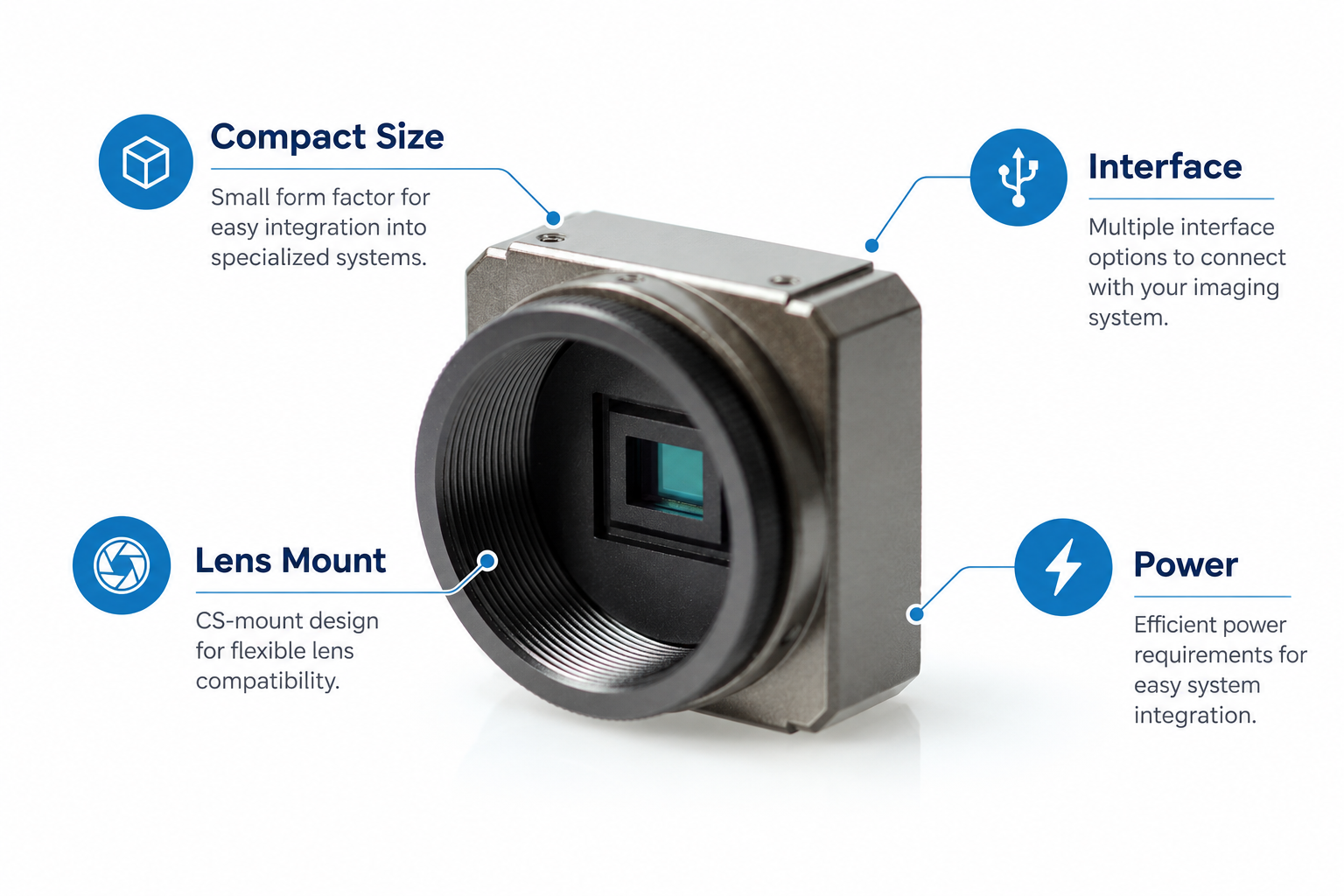
Compact dimensions and low weight can matter when a camera must fit within an instrument or space-constrained imaging system.
5
Interface
USB and other video interfaces provide different options for connecting the camera to the larger imaging system.
Designed for Integration
In research and scientific imaging, the camera is often one component within a larger system. Physical dimensions, weight, lens compatibility, power requirements, and connectivity can therefore be just as important as imaging performance.
Watec’s compact camera designs and range of interface options provide flexibility for integration into specialized imaging and observation systems.
Color or Monochrome?
The choice between color and monochrome depends on the information the application needs to preserve.
Color imaging can be important when color itself provides useful information. Monochrome imaging removes the need to reproduce color and may be appropriate when brightness, contrast, or low-light sensitivity are the greater priorities.
For a deeper look at how these differences become especially important as illumination decreases, we've explored the subject in our technical guide:
Watec Cameras for Scientific & Research Imaging

WAT-03U2
Compact USB 2.0 Color Camera
A compact color imaging option with selectable resolutions up to 1280 × 960, USB Video Class compatibility, CS-mount lens support, and low-light imaging capability.
Key specifications:
1/3" CMOS • Up to 1280 × 960 • Up to 60 fps • 32 × 32 × 23 mm • Approx. 35 g

WAT-06U2
Full HD USB Color Camera
A compact USB camera providing Full HD color imaging for applications requiring greater image resolution while maintaining a small camera footprint.
Key specifications:
Full HD 1920 × 1080 • Color CMOS • USB connectivity • Compact design

WAT-07U2D
Full HD Monochrome USB Camera
A compact monochrome imaging option combining Full HD output, USB-C connectivity, and an IPX7-rated enclosure for research environments.
Key specifications:
1920 × 1080 • Monochrome • 0.004 lx minimum illumination • USB-C • IPX7
Finding the Right Camera for Your Imaging Requirements
Scientific and research imaging requirements can vary considerably. Available light, required detail, color information, physical constraints, connectivity, and environmental conditions can all influence camera selection.
Watec can help identify camera options based on the imaging requirements of your application.